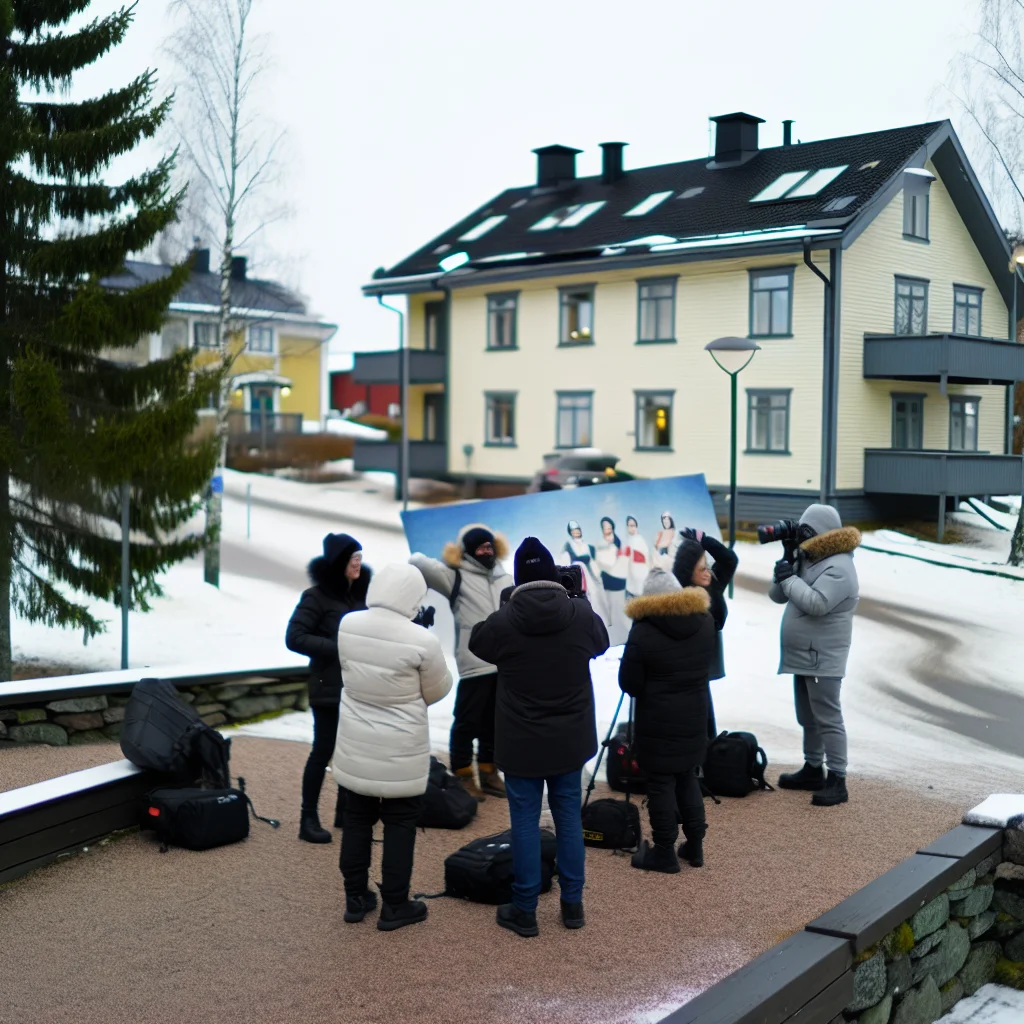
Pikkujoulu in Finland, The Little Christmas
"Pikkujoulu" is Finnish and means "little Christmas" or "little Christmas". This refers to small Christmas parties, which Finns sometimes celebrate as early as November in companies, clubs or even privately.
Gifts and Christmas Karaoke
Pikkujoulu differs from Christmas in that it is a generally less religious festival. It's not so much about celebrating the birth of Christ and the focus is on time spent together with friends and family.
Often people already give each other small gifts to pikkujoulu. However, these are often joke gifts.
Entertainment will be provided at Pikkujoulu by the traditional Christmas karaoke. Karaoke is generally very popular in Finland, which is reflected in the high number of karaoke bars in the country.
Christmas karaoke involves singing Christmas carols in Finnish, but often also in English and Swedish.

Traditional food and drinks
For the Little Christmas, Christmas food is served in Finland for the first time in the year. Probably the most traditional Christmas meal in Finland is Christmas ham with many different side dishes or even smoked fish.
When Pikkujoulu is celebrated, especially the traditional drink"glögi" is often drunk and especially sweet trifles, such as"piparkakku" and "joulutorttu" are served.
Glögi
Glögi can be considered theFinnish version of mulled wine. Glögi consists of red wine, juice, and spices such as cinnamon, cardamom, ginger and cloves and is drunk warm. It is often served with raisins and peeled almonds.
Glögi is also very popular in other Scandinavian countries, especially in Sweden, at Christmas time.
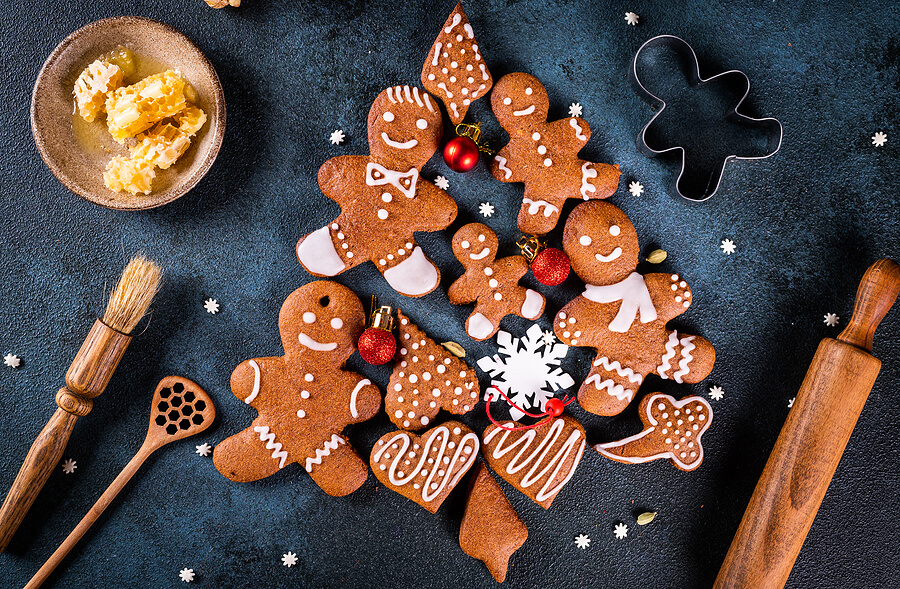
Piparkakku
Piparkakku is the Finnish name forgingerbread. Although it is called a cake, piparkakku is usually in the form of small cookies or cookies.
The name is misleading, because pepper does not belong in a gingerbread. Instead, gingerbread is made from syrup, sugar, egg, butter, flour and spices such as cinnamon, ginger powder, clove powder, cardamom. Often add to the dough a little grated orange peel and, of course, baking powder.
The butter is mixed with the syrup, sugar, salt and other spices and the mixture is then brought to a simmer. After that, let the mixture cool and then add the remaining ingredients.
The finished dough is covered with plastic wrap and placed in the refrigerator or outside in the cold overnight. The next day you can roll out the dough and cut out the cookies.
After baking, if you like, you can decorate the cookies with powdered sugar or icing.
Joulutorttu
Joulutorttu is the name for Finnish Christmas cakes. The word cake is rather misleading, because these are small pastries in the shape of a star.
The dough often consists of flour, cream cheese, butter, salt, cardamom, lemon zest and egg yolk. However, there are many different variations. The dough is divided into small pieces, which are then formed into thetraditional star shape.
However, the Danish pastries are not only made of dough, but have a filling in the middle, which is madefrom berry jam and a little cornstarch.
Before baking, you can brush the Danish pastries with a little egg and after baking, dust them with a little powdered sugar.
The history of pikkujoulu
Pikkujoulu is based on Advent. Pikkujoulu, like Advent, is characterized by the wait for Christmas.
In the 19th century, Advent was sometimes referred to as "Little Christmas," which evolved into Pikkujoulu in Finland. The pikkujoulu tradition began inHelsinki schools after World War I and quickly spread throughout the country.
The tradition of private pikkujoulu celebrations probably has its origin in Tuomas' name day, which isDecember 21. On this day, traditionally, you can taste homemade beer for the first time in the year.
In Sweden, this day is called"lilla jul", which means"little Christmas" and thus "pikkujoulu".
Conclusion
Pikkujoulu is the name given to thesmall Christmas celebrations that take place in Finland before Christmas.be celebrated in companies, clubs or even privately. People often exchange smalljoke giftsat these celebrations. Entertainment will be provided by the traditional Christmas Karaoke.
Often"glögi", "piparkakku" and "joulutorttu" are served.
The most frequent questions from travelers
What does "pikkujoulu" mean?
"Pikkujoulu" is Finnish and means "little Christmas" or "little Christmas".
What is "glögi"?
Glögi is the Finnish equivalent of mulled wine. Glögi is made from red wine, juice and spices such as cinnamon, cardamom, ginger and cloves and drunk warm.
Why do people celebrate Pikkujoulu?
Pikkujoulu is celebrated in anticipation of Christmas and thus can be compared to Advent. However, Pikkujoulu is less about the religious and more about spending time with friends and family.
Frequently asked questions about Pikkujoulu
What does Pikkujoulu mean?
Pikkujoulu translates to "Little Christmas" in Finnish. It refers to pre-Christmas parties held by companies, clubs and friend groups during November and early December, before the actual holiday season begins.
When is Pikkujoulu season?
Pikkujoulu parties run from mid-November through mid-December. The peak falls in late November and the first two weeks of December. Restaurants and venues book up months in advance during this period.
Can tourists attend a Pikkujoulu party?
Most Pikkujoulu events are private company or group gatherings. However, some restaurants and hotels organize open Pikkujoulu buffets and parties that visitors can join. Check local listings in Helsinki and other major cities during November.

Sergej Gerber
I am an absolute Scandinavia fan and have been traveling to the beautiful Scandinavian countries for over 12 years. Here I share my experiences and tips about the Scandinavian countries and the Baltic Sea region.